

SEO Cost in Bangalore: Scope, Pricing and Evaluation Guide
SEO prices are meaningful only when tied to a defined scope. This guide explains how to compare SEO cost in Bangalore without inventing market averages, treating a package label as a guarantee, or confusing activity counts with business outcomes.
Current Digirank price context
As reviewed on 18 August 2026, Digirank’s published SEO packages are ₹30,000, ₹50,000 and ₹1,00,000 per month. These are Digirank’s listed prices—not Bangalore market averages—and the right scope should follow a website and opportunity review.
What changes the cost of SEO?
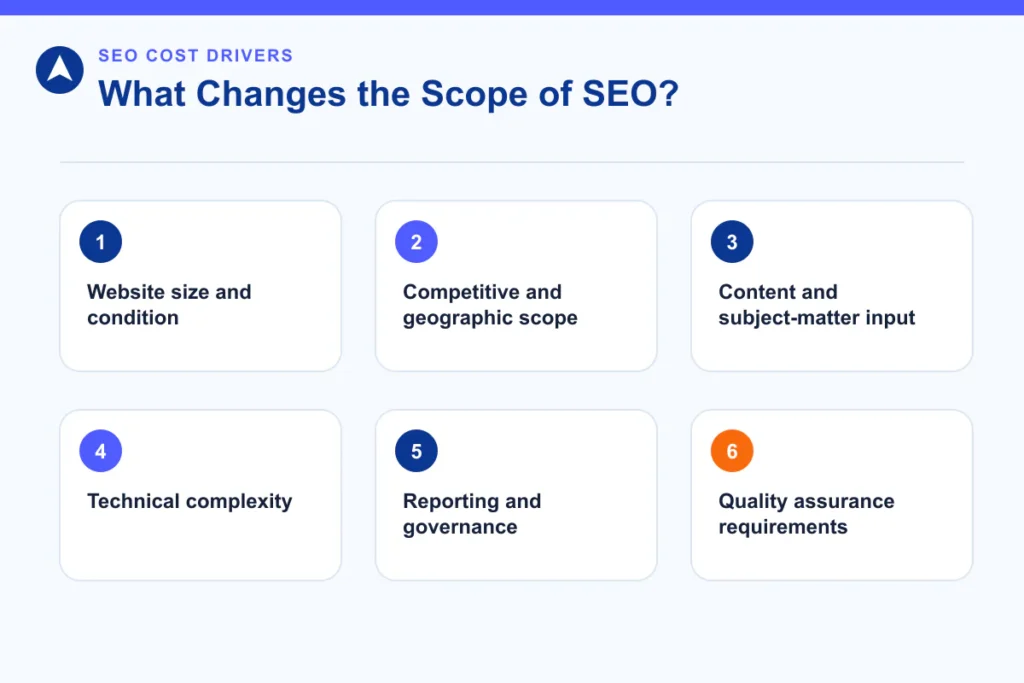
Website size and condition
A small service website and a large catalogue do not require the same crawl, template, content or QA effort. Migration history, duplicate URLs, JavaScript rendering, internal linking and indexation issues can materially change the work.
Competitive and geographic scope
One focused service category differs from a multi-service or multi-market programme. Broader scope increases the number of intents, page types and competitors that must be researched and maintained.
Content and subject-matter input
Useful content needs evidence, editorial review and accountable authorship. Costs rise when an agency must coordinate interviews, original data, specialist review, design or multimedia—not simply because an arbitrary word count is higher.
Measurement and implementation
Analytics configuration, Search Console review, conversion definitions, dashboarding, technical implementation and developer coordination are separate workstreams. Ask which are included and who owns each one.
How Digirank’s listed packages are structured
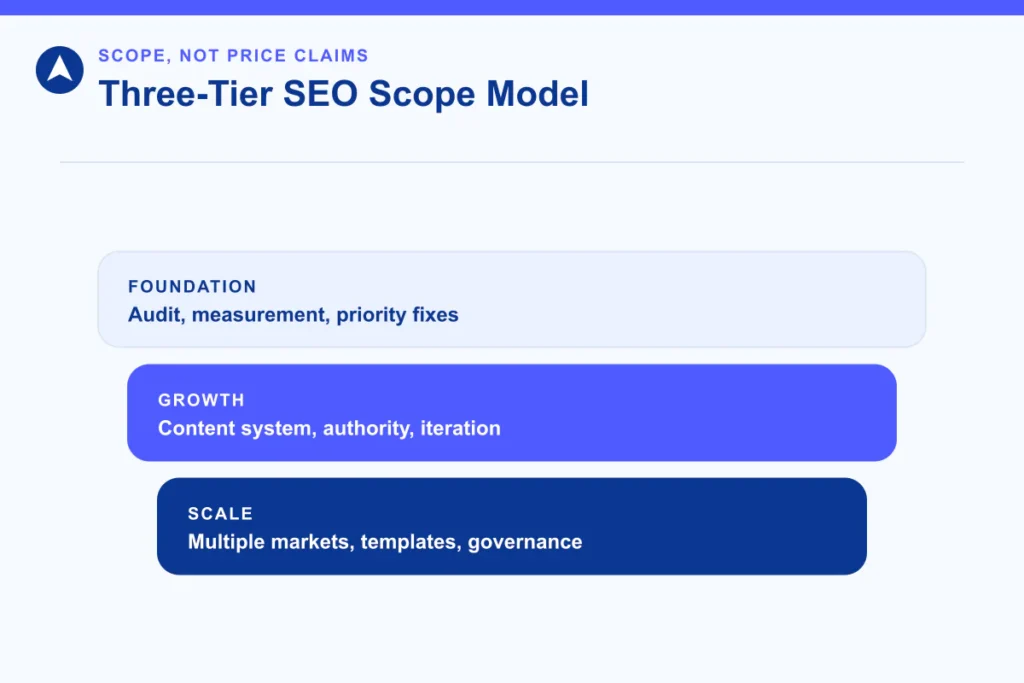
The live SEO services page currently lists Startup at ₹30,000/month, Advanced at ₹50,000/month and Premium at ₹1,00,000/month. Each card also lists different keyword, page, blog and service-hour scopes. Those counts describe the published package; they do not guarantee rankings, traffic, leads or revenue.
Use this proposal-normalisation worksheet
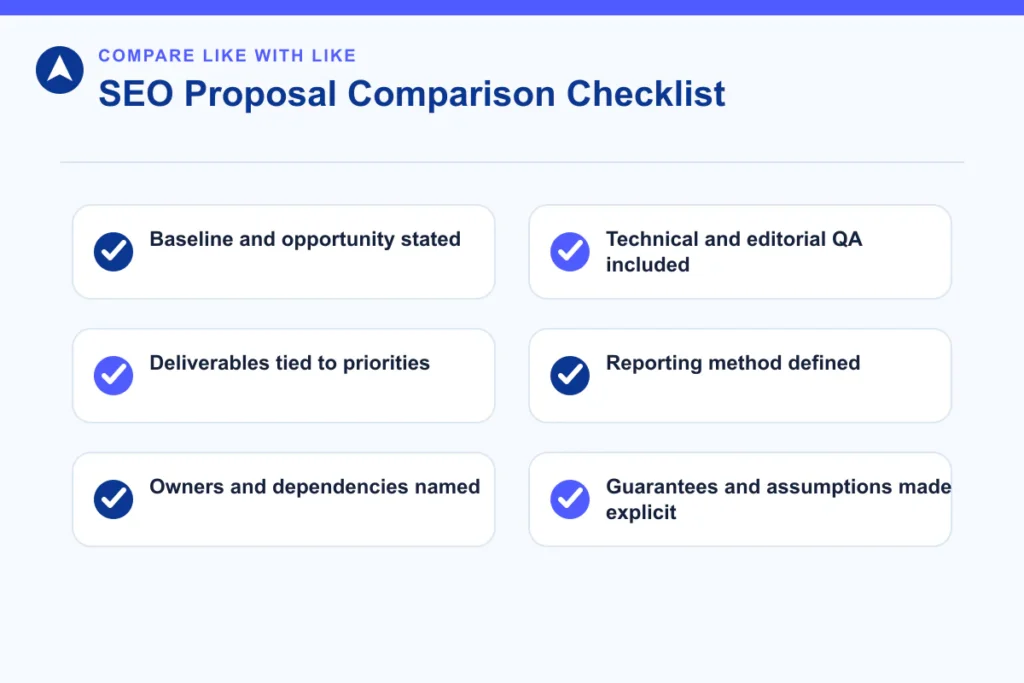
- Price basis: monthly retainer, fixed project or hybrid.
- Included URLs and templates: list them, not just a page count.
- Research: audiences, query intent, competitors and existing GSC ownership.
- Implementation: content changes, technical work and developer responsibility.
- Content: who supplies expertise, drafting, review, images and approvals.
- Measurement: conversion definitions, analytics access and reporting cadence.
- Dependencies: CMS access, engineering time, legal review and stakeholder feedback.
- Exclusions: migrations, development, digital PR, media spend and paid tools.
- Exit and ownership: access, files, dashboards and work completed to date.
Red flags in an SEO quotation
- Guaranteed rankings or fixed traffic outcomes.
- Invented search-volume, difficulty or revenue claims presented without a named source and date.
- A large list of deliverables with no URL, query or business rationale.
- No explanation of how existing pages will be protected from cannibalisation.
- Link promises based only on a third-party authority score.
- Reporting that stops at impressions and sessions without agreed business actions.
How to choose the right scope
Begin with the smallest scope capable of testing the core hypothesis. Define the search intents, current owner URLs, necessary improvements, measurement events and review period. Expand only when the work reveals additional, non-duplicative opportunities.
Related Digirank guidance
Compare organic and paid routes in SEO vs Google Ads, or use the broader agency evaluation scorecard before appointing a partner.
Primary sources and review note
Reviewed 18 August 2026. Platform settings and policies can change; verify them in the relevant account before acting.