
SEO vs Google Ads: A Decision Framework for Indian Businesses
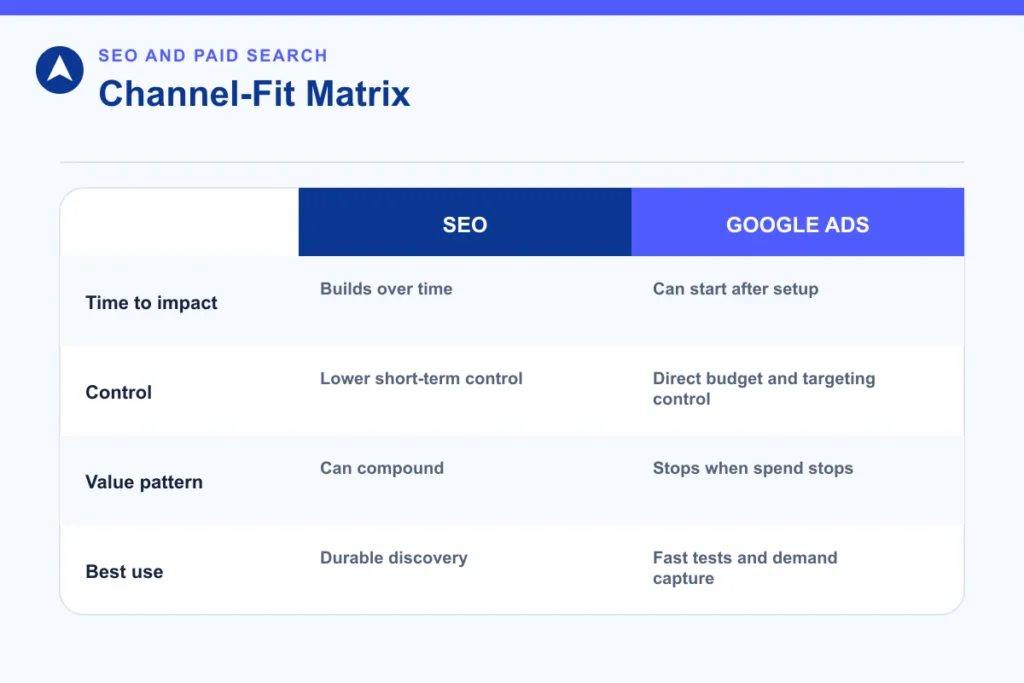
SEO and Google Ads solve different growth problems. SEO develops unpaid search visibility over time; Google Ads buys eligible auction participation and offers faster control over targeting and spend. The right choice depends on the job the channel must do, not on a universal winner.
Digirank decision rule
Use Google Ads when speed, testability and precise campaign control dominate. Use SEO when durable discovery, compounding content value and broader organic coverage dominate. Use both when paid learning can inform a long-term organic programme.
SEO vs Google Ads: the five-question decision matrix
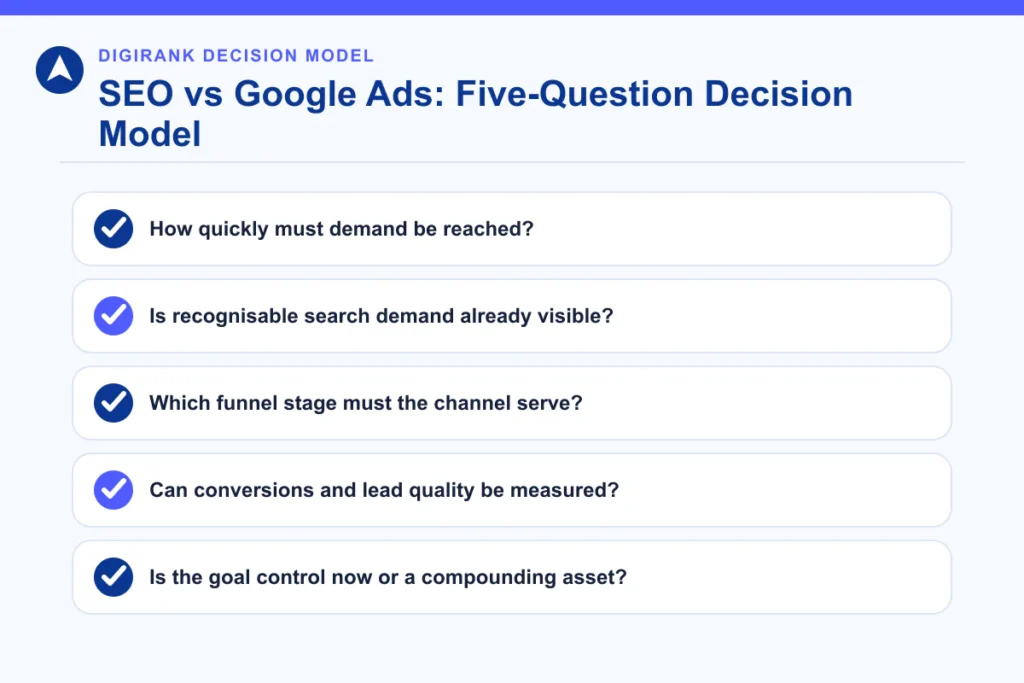
1. How soon must qualified demand be reached?
Google Ads can begin serving after setup, review and eligibility checks, while SEO normally requires discovery, indexing, relevance and competitive signals to develop. Fast does not mean guaranteed: an ad can run quickly without producing profitable enquiries.
2. Is the search demand already visible?
Search campaigns are strongest when prospects already use identifiable queries. SEO can cover both commercial searches and earlier research questions, but each page still needs a clear owner and useful answer. If the market is primarily interrupted by visual ideas rather than actively searching, consider the Meta comparison later in this guide series.
3. What control is required?
Google Ads offers campaign-level choices for locations, schedules, keywords, audiences, budgets and bidding. SEO offers less immediate control over ranking or click volume. It instead builds assets that can remain useful beyond a campaign window.
4. Can outcomes be measured correctly?
Both channels need an agreed conversion definition. Track business-relevant actions such as qualified calls, forms, purchases or booked consultations—not traffic alone. Keep ad spend, agency fees, revenue and gross margin separate in reporting.
5. What happens when spending pauses?
Paid traffic generally stops when campaigns stop serving. Organic pages can continue to attract visits, but rankings can change and require maintenance. Treat SEO as an operated system, not a one-time asset.
A practical channel-choice scorecard
Score each statement from 0 (not true) to 2 (strongly true). A larger Google Ads score suggests a paid test; a larger SEO score suggests an organic programme. A close result supports a coordinated mix.
Google Ads indicators
- You need market feedback in weeks rather than quarters.
- Search queries are clear and commercially meaningful.
- You can fund both media and accurate conversion measurement.
- A landing page and enquiry-handling process are ready.
- You accept that results depend on auction conditions, offer quality and execution.
SEO indicators
- Customers research several questions before choosing.
- Your team can contribute expertise and approve useful content.
- You need coverage across services, comparisons and education.
- You can maintain technical health and update content.
- You value an owned knowledge base as well as near-term leads.
How the channels work together
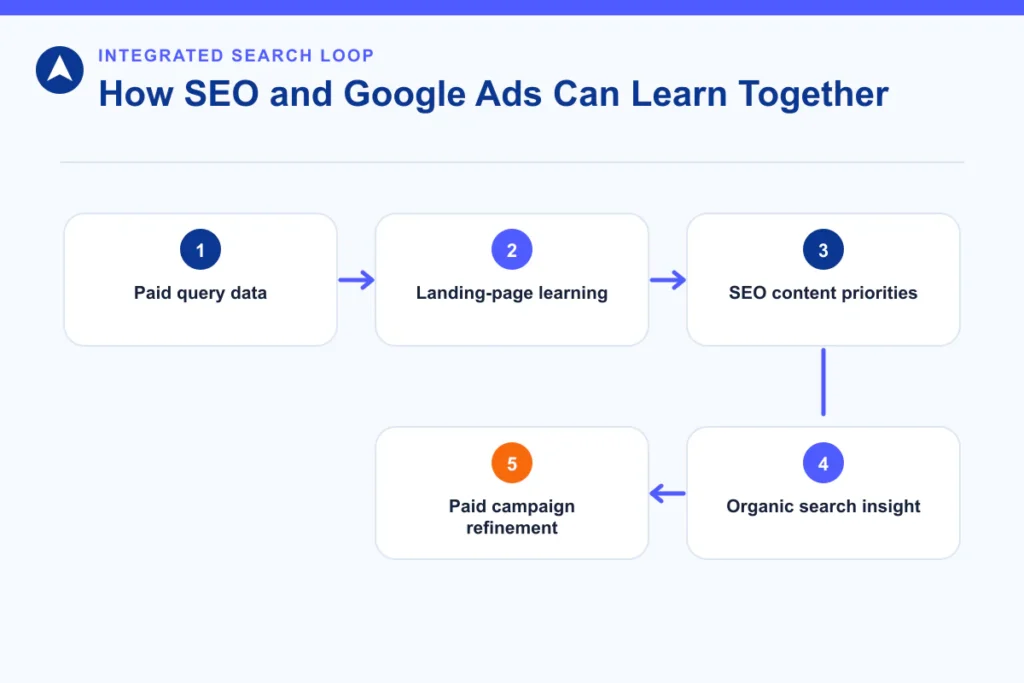
- Use paid-search query and landing-page learning as an input to editorial prioritisation, without assuming ads determine organic rankings.
- Use SEO pages to answer questions that are too early-stage or expensive to cover continuously with ads.
- Keep landing-page intent aligned: a pricing guide, service page and comparison guide should not all target the same query.
- Compare qualified outcomes by channel while acknowledging assisted journeys and attribution limits.
Common mistakes to avoid
- Choosing solely from a headline cost-per-click or ranking promise.
- Counting all leads equally without checking quality.
- Launching paid traffic before conversion tracking and landing-page QA.
- Publishing many similar SEO pages without a distinct search intent.
- Presenting projected results as guaranteed results.
Next steps with Digirank
For organic scope, review Digirank’s SEO services. For paid-search management, see the PPC services page. The appropriate starting point is a measurement and intent review, not a guaranteed outcome.
Primary sources and review note
Reviewed 18 August 2026. Platform settings and policies can change; verify them in the relevant account before acting.
- Google Search Central: advertising does not affect organic ranking
- Google Ads Help: bids and budgets