What Is Semrush and How to Use It for SEO
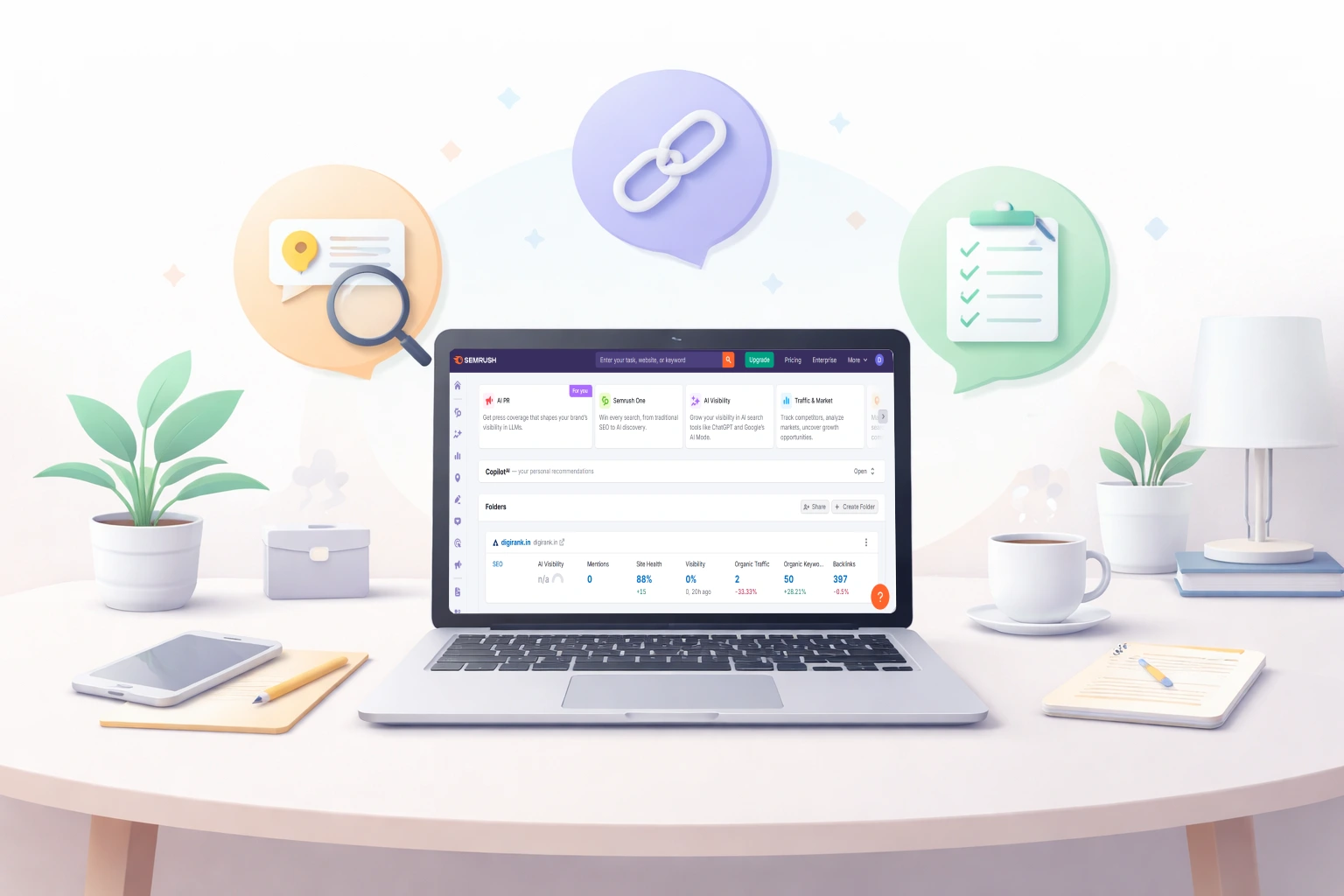
Semrush is an all-in-one SEO and digital marketing platform that helps you research keywords, analyze competitors, audit your site, check backlinks, and estimate traffic trends. In simple terms, it’s a single dashboard to find what’s blocking your growth and what to do next. Semrush positions itself as a suite for SEO research and reporting, including keyword research, competitor analysis, audits, and backlinks, and Google’s SEO Starter Guide explains the baseline best practices that make any SEO tool output more useful. If you want the basics nailed down first, start with our guide on what SEO is, which is often the quickest way to understand what is semrush in context.
If you’re a founder or business owner, the fastest win comes from using Semrush to answer three questions:
- Which pages and keywords drive real search demand?
- Where are competitors winning that you are not?
- What technical issues silently hold your site back?
What is Semrush (and what it is not)
Semrush is best used as an SEO decision tool, not a content shortcut. It shows opportunities and issues, but your execution still decides results.
Semrush provides toolkits for SEO, PPC, content, and competitive research, with popular features like keyword research, audits, rank tracking, and backlink analysis.
Semrush does not “rank” you. It gives you measurements, comparisons, and checklists so you can pick the right work.
What is Semrush used for (the 6 jobs it does well)
Semrush becomes useful when you treat it like a troubleshooting kit: measure first, then fix. These are the six jobs where it usually pays for itself.
- Competitor snapshot in minutes using Semrush Domain Overview, which Semrush explains in its official Domain Overview guide
- Domain Overview provides a single report covering organic, paid, backlinks, and broader visibility signals.
- Keyword research that is easy to organize using Semrush Keyword Magic Tool, which Semrush covers in its Keyword Magic Tool manual
- Keyword Magic Tool generates large keyword lists, groups them by topic, and shows metrics like volume and difficulty.
- Backlink research and cleanup using Semrush backlink checker (Backlink Analytics), and the Backlinks report manual shows what the report is designed to surface
- Backlink Analytics lets you study a site’s backlink profile using Semrush’s backlink database.
- Traffic estimation and competitor demand using Semrush traffic checker (Traffic Analytics), which Semrush positions in its Traffic Analytics overview as a comparison and trend tool
- Traffic Analytics is designed for comparing sites and understanding behavior trends, not replacing your analytics.
- On-site issue detection with audits and project tracking
- Semrush’s getting-started workflow emphasizes setting up projects and using audits and tracking to drive improvements.
- Reporting and stakeholder clarity
- Semrush highlights reporting workflows for combining data sources and demonstrating impact.
A simple Semrush workflow that improves SEO fast
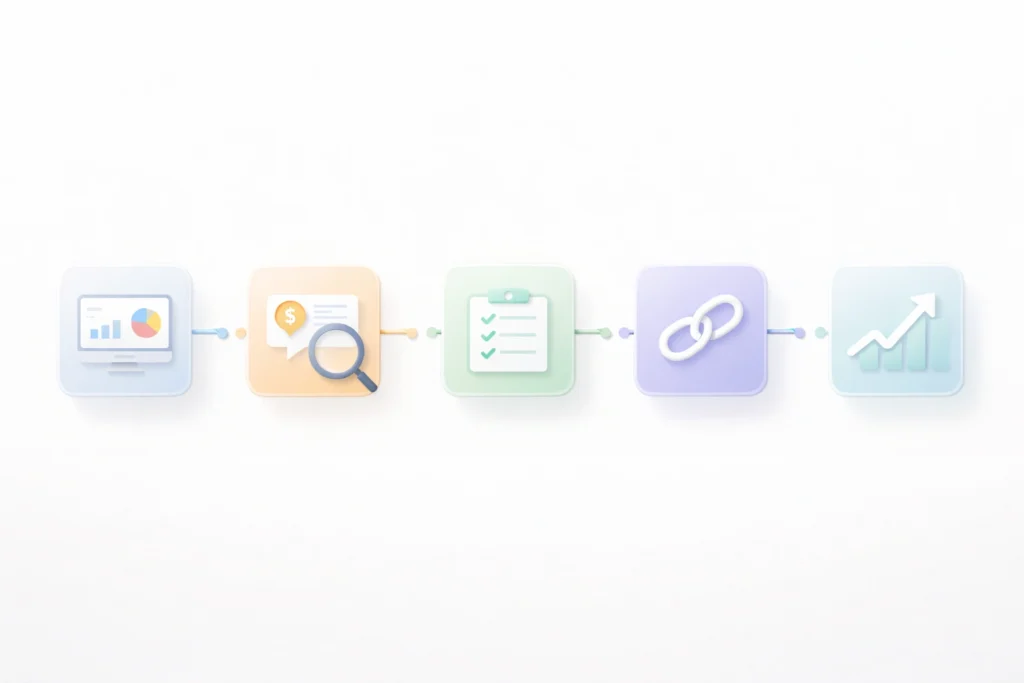
If you do Semrush in the right order, you avoid noise and get decisions quickly. Use this sequence for most sites.
Step 1: Use Semrush Domain Overview to pick the right competitor
Start with one competitor you actually lose customers to, not the biggest brand in your industry. Domain Overview gives a high-level snapshot so you know where to dig deeper.
What to check first:
- Organic search strength (directional)
- Top topics/keywords (to spot content gaps)
- Backlink authority trend (to understand why they rank)
Depends on scenario:
- If your niche is local and small, compare against the strongest local player, not a national marketplace.
- If you sell B2B, pick a competitor with similar sales cycles and content depth.
Step 2: Do Semrush keyword research with Keyword Magic Tool
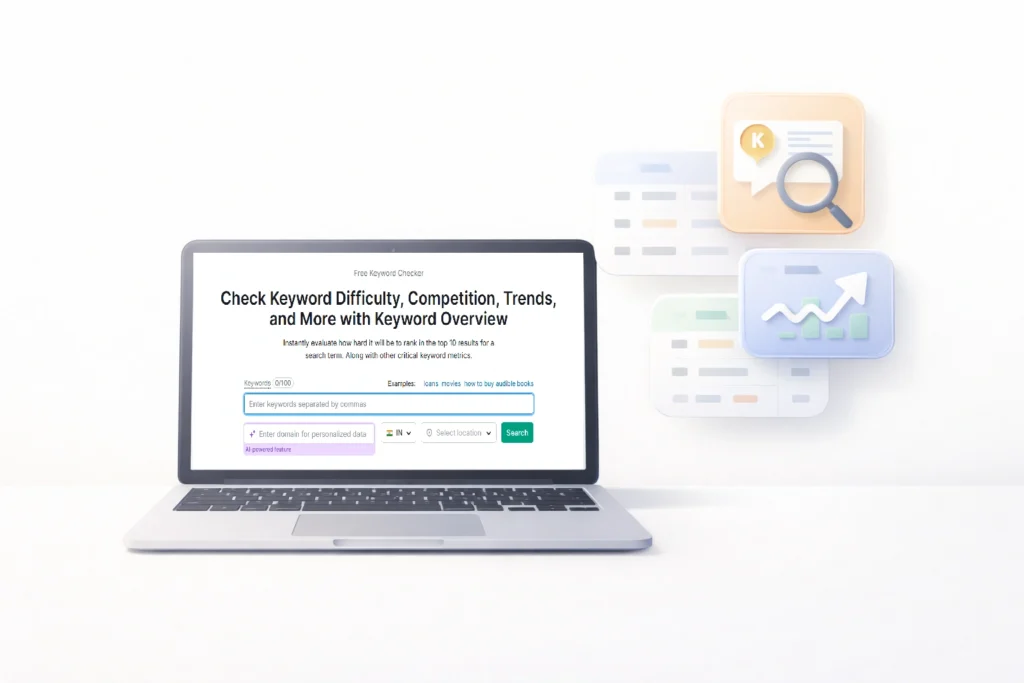
Your best keywords are usually not the biggest ones, they are the clearest ones. Keyword Magic Tool helps you expand from a seed term into grouped ideas and long-tail queries.
How to use Semrush for keyword research (quick method):
If you’re building a keyword list from scratch, our step-by-step guide on keyword analysis in SEO helps you pick terms you can actually win.
- Enter a seed keyword.
- Filter for intent that matches your page type.
- Sort by realistic difficulty.
- Save a short list for content and landing pages.
What to export:
- 20–50 keywords grouped by one theme
- A separate list of question keywords for FAQs
Step 3: Turn keyword lists into pages that rank
Semrush data is only useful when it becomes a page plan. Match one keyword group to one page, with one clear purpose.
A practical mapping rule:
- One page should target one primary topic and a small set of close variations.
- Use question keywords for FAQs and subheadings.
Step 4: Use Semrush backlink checker to learn what links work in your niche
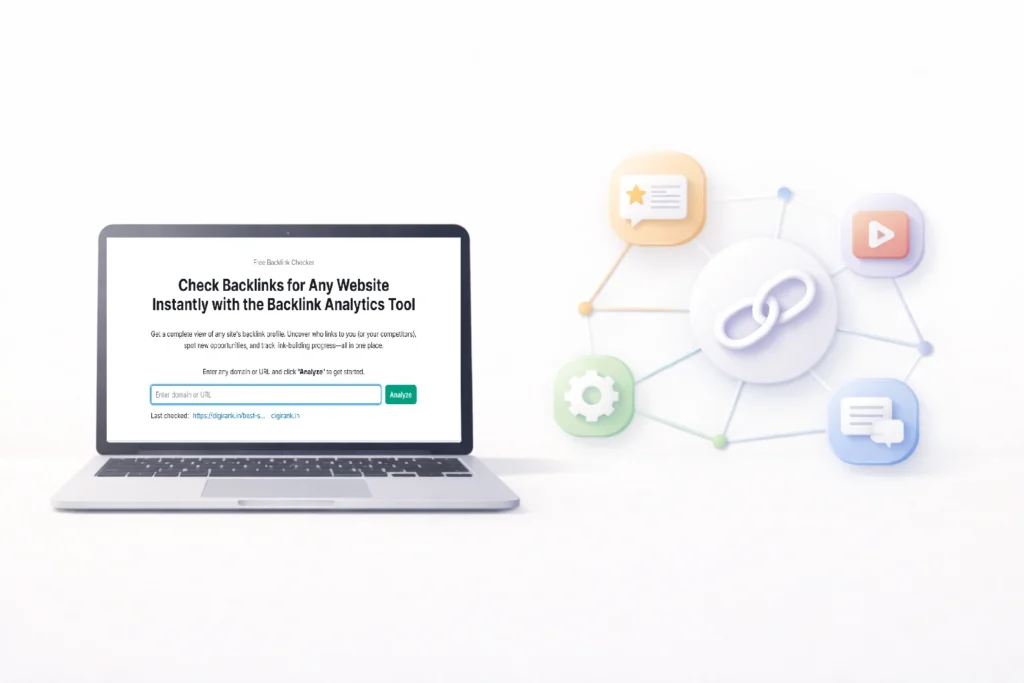
Backlinks matter less in quantity and more in relevance and trust. Use Backlink Analytics as a research tool before you pitch anyone. It also helps to understand the bigger picture of off-page SEO so you don’t chase low-value links.
What to check:
- Which pages attract links (usually guides, stats, tools)
- Which domains link repeatedly (partnership patterns)
- Anchor text patterns (to avoid spammy footprints)
Depends on scenario:
- If you’re a new site, a few high-trust local or niche links can beat dozens of random directories.
Step 5: Use Semrush traffic checker for trend direction, not exact numbers

Traffic tools estimate. Your analytics measure. Use Traffic Analytics to compare and spot shifts, then validate with Google Analytics 4 and Google Search Console.
A simple check:
- Compare 2–3 competitors.
- Look for channel mix changes and geography shifts.
- Use it to pick content bets, not to report “exact traffic”.
How to use Semrush to improve SEO (what to fix first)
Fix the issues that block crawling, relevance, and trust, in that order. That’s how you get measurable movement without rewriting your whole site.
- Relevance issues
- Pages target broad keywords with unclear intent.
- Titles don’t match the question the user asked.
- Structure issues
- Long paragraphs bury answers.
- No clear subheadings or FAQ section.
- Trust issues
- No author identity, no proof, no helpful examples.
- Technical issues
- Slow pages, broken internal links, indexing problems.
If technical blockers keep showing up, this explainer on technical SEO will make the fixes clearer.
If you want a “do-this-first” setup, start by running a proper site check. Our guide on what an SEO audit is shows what to look for before you move into deeper tool reports.
A small table to choose the right Semrush tool fast
This table helps you pick the correct Semrush report so you don’t click around for 30 minutes. If you’re comparing platforms, this shortlist of best SEO tools can help you decide what to keep in your stack.
|
Your goal |
Best Semrush tool |
What you get |
|---|---|---|
|
Quick competitor snapshot |
Semrush Domain Overview |
High-level organic, paid, backlinks snapshot |
|
Build a keyword plan |
Semrush Keyword Magic Tool |
Grouped keyword lists + metrics |
|
Check backlinks |
Semrush backlink checker |
Referring domains, anchors, link patterns |
|
Compare traffic trends |
Semrush traffic checker |
Directional traffic + behavior insights |
Digirank’s take: Semrush is an instrument panel, not the engine
Semrush works best when you treat it like a dashboard: it tells you what’s wrong and what’s possible, but you still have to drive.
After two decades of watching systems fail for boring reasons, I’ve learned this rule: the best tools reduce guesswork, not effort.
So we use Semrush like this at Digirank:
- One report must lead to one decision.
- One decision must lead to one measurable change.
- One change must be checked in Search Console and GA4.
If your Semrush work does not end in an action, it’s just screen time.
Why Semrush data feels different from your analytics
Semrush is strongest for comparison and discovery, while GA4 and Search Console are strongest for measurement. Use each for what it does best.
Semrush describes Traffic Analytics as comparable across websites, which signals it’s designed for relative comparison rather than perfect precision.
Final takeaway and next steps
If you learn one thing, let it be this: Semrush helps you find the next best SEO action faster. Start with Domain Overview, build your keyword list with Keyword Magic Tool, then validate with real measurement.
If you want Digirank to set up Semrush properly for your business and turn the data into a 90-day SEO plan, reach out through our website.
And if your team is scaling fast and you need reliable machines for SEO work, reporting, and content production, consider laptop rentals to avoid large upfront costs. For local support, check our best SEO services in Bangalore page.
Quick answers people search for
1) What is Semrush in simple words?
Semrush is a marketing tool that helps you research keywords, study competitors, audit your site, and analyze backlinks so you can improve SEO and online visibility.
2) What is Semrush used for in SEO?
It’s used for keyword research, competitor analysis, site audits, rank tracking, backlink analysis, and traffic trend checks, all from one dashboard.
3) How do I use Semrush for keyword research?
Open Keyword Magic Tool, enter a seed keyword, filter by intent and difficulty, then export a grouped list of long-tail keywords to plan pages and FAQs.
4) How accurate is Semrush traffic checker?
It’s an estimate designed for comparison and trend direction. Use it to benchmark competitors, then confirm results with your own analytics like GA4.
5) How do I check backlinks in Semrush?
Use Backlink Analytics, enter the domain, and review referring domains, anchors, and top linked pages to understand link quality and patterns.
6) What is Semrush Domain Overview?
It’s a snapshot report that summarizes a domain’s organic search, paid search, backlinks, and visibility signals in one place.
7) What is Semrush Keyword Magic Tool?
It’s a keyword research tool that creates large keyword lists, groups them by topic, and shows metrics to help you build a keyword strategy.
8) Is Semrush good for beginners?
Yes, but start with one workflow: create a project, run audits, and do keyword research before exploring advanced features.