

How to Choose a Digital Marketing Agency in Bangalore
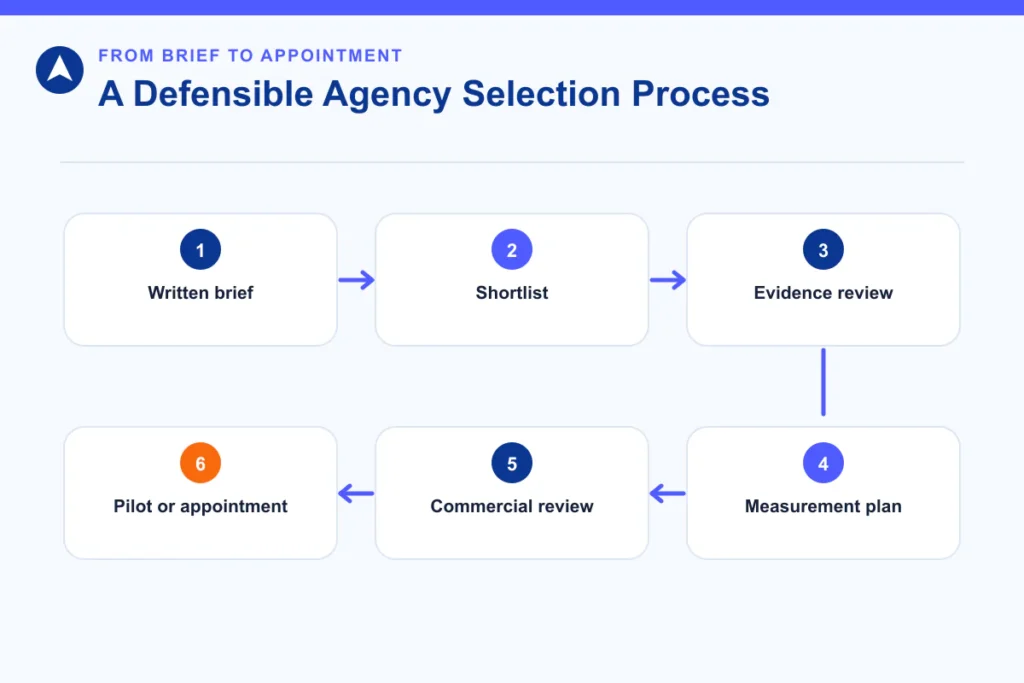
A strong agency selection process tests how a team thinks, measures, communicates and protects your assets. Awards, dashboards and case-study headlines are secondary unless the evidence and commercial terms can be examined.
Digirank evaluation method
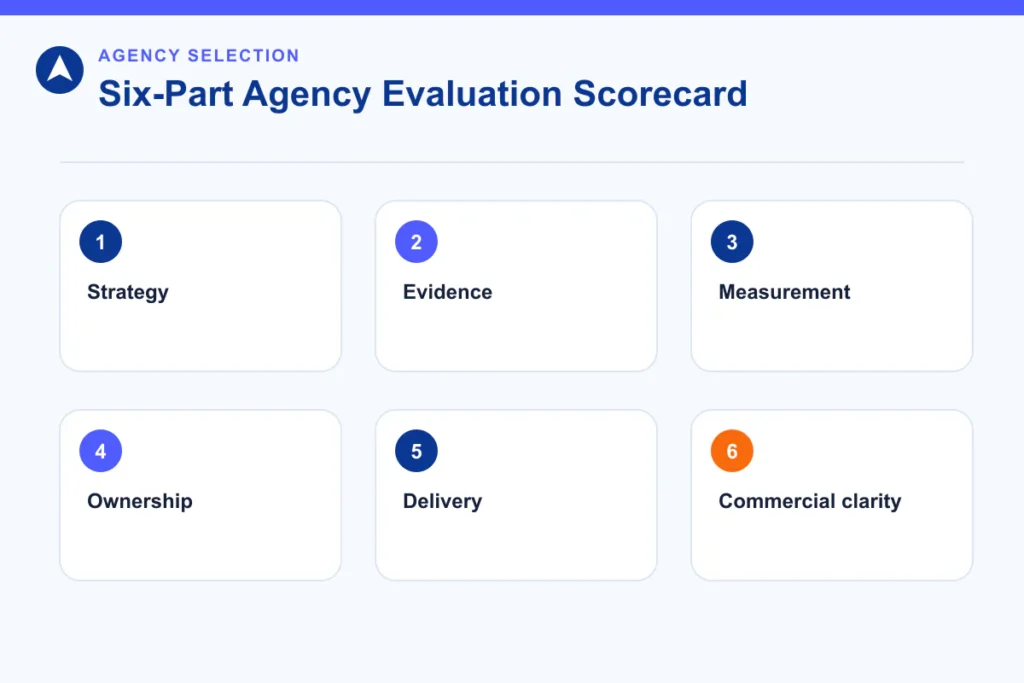
Score six areas from 0 to 5: strategy, evidence, measurement, ownership, delivery and commercial clarity. Require written evidence for any score above 3. Weight the areas to match your risk—not the agency’s sales deck.
1. Strategy and problem definition
- Can the agency restate the business goal without defaulting to a channel?
- Does it identify audiences, demand state, constraints and current owner URLs?
- Does it explain what should not be done?
- Are recommendations tied to a testable hypothesis?
2. Evidence and claim quality
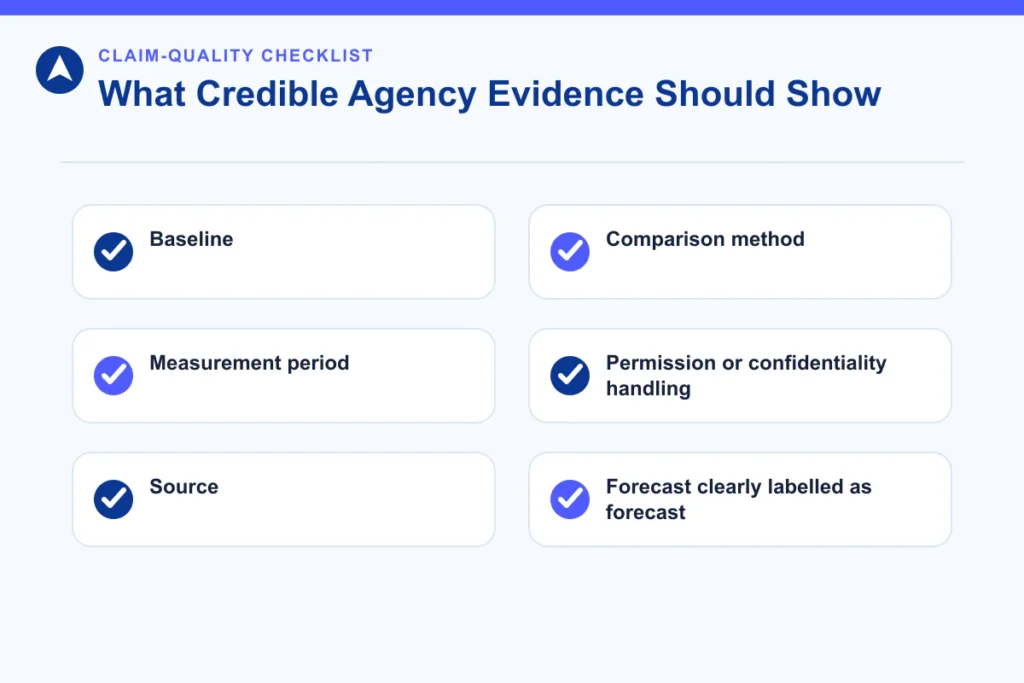
- Are case-study outcomes tied to a baseline, period, source and comparison method?
- Is client permission or confidentiality handling clear?
- Are screenshots legible and sufficient to support the claim?
- Are forecasts labelled as forecasts rather than promised outcomes?
- Can references be checked independently?
3. Measurement design
- Which actions count as conversions?
- How will lead quality and offline outcomes be reviewed?
- Who owns analytics, ad accounts, Search Console and dashboards?
- How are attribution limits explained?
- What QA happens before any live form or campaign activity?
4. Ownership and access
- Will your business retain administrator access to websites, domains, analytics and advertising accounts?
- Who owns creative files, research, copy and dashboards after termination?
- Are third-party licences and renewal costs documented?
- Are exports and handover steps written into the agreement?
5. Delivery and communication
- Who is accountable and who performs the work?
- What is the meeting and reporting cadence?
- How are blockers, approvals and change requests handled?
- Which dependencies sit with your team?
- What does acceptance or completion mean for each deliverable?
6. Commercial clarity
- Is the fee separated from ad spend, software, hosting, production and taxes?
- Are inclusions, exclusions and assumptions explicit?
- Is the minimum term and notice period clear?
- How is out-of-scope work approved?
- Are there guarantees that should instead be scenarios or targets?
A simple weighted scorecard
Assign each category a weight totalling 100. Multiply the 0–5 score by its weight, record the evidence link, and add a risk note. Do not let a high presentation score cancel a critical ownership or measurement failure.
Suggested neutral starting weights
- Strategy: 20
- Evidence: 20
- Measurement: 20
- Ownership: 15
- Delivery: 15
- Commercial clarity: 10
Questions to ask references
- What was the initial scope and did it change?
- Which result was independently visible to you?
- How did the agency handle a missed assumption or underperforming test?
- Did you retain account and asset ownership?
- Was reporting understandable and linked to business decisions?
Bangalore-specific checks without locality-page spam
Confirm the working timezone, meeting expectations, in-person requirements, language needs and any on-site production. These are delivery questions; they do not justify dozens of near-duplicate neighbourhood pages.
Compare Digirank’s relevant options
Review the live scopes for SEO, PPC, website development and social media marketing. Ask for evidence and scope that fit your decision; no ranking, traffic, lead or revenue outcome should be assumed.
Related buying guides
Use the SEO cost guide to normalise organic proposals and the website cost guide to normalise build proposals.
Primary sources and review note
Reviewed 18 August 2026. Platform settings and policies can change; verify them in the relevant account before acting.