

Meta Ads vs Google Ads: A Channel-Fit Framework
Meta Ads and Google Ads reach people in different demand states. Google Search can capture expressed intent; Meta can create or shape demand through audience, creative and placement. The best first channel depends on the buying situation and measurement readiness.
Channel-fit rule
Start with Google Search when people already look for the solution in recognisable queries. Start with Meta when the offer is visually demonstrable, discovery-led or audience-defined. Use both only when each has a distinct funnel job and shared measurement.
Compare the channels across six dimensions
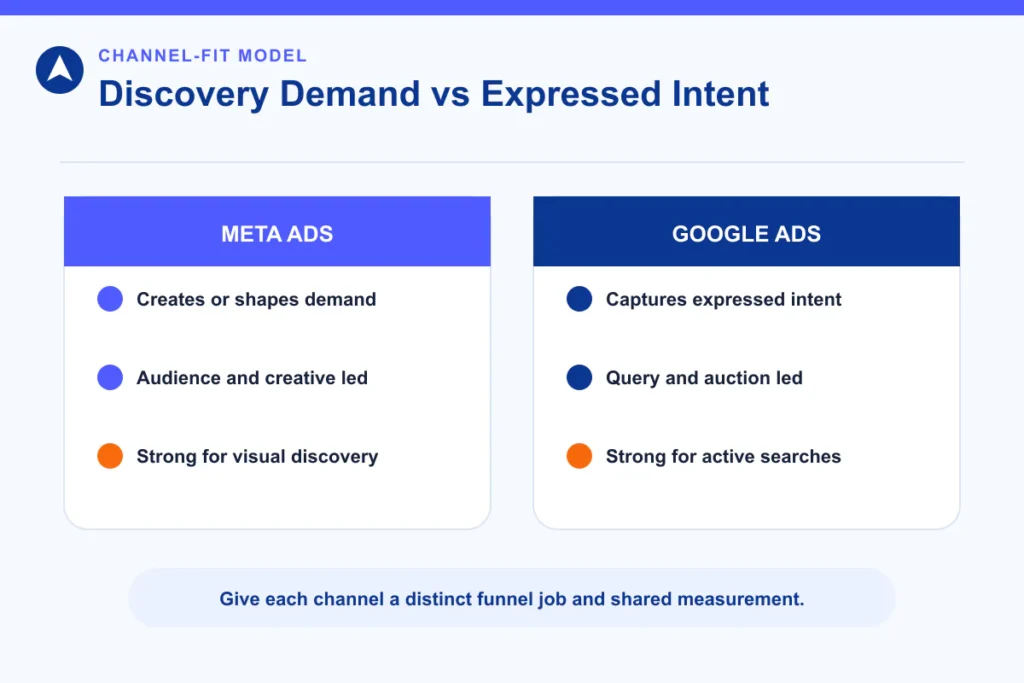
Demand state
Google Search is query-led: the person expresses a need. Meta delivery is audience and auction-led across Facebook, Instagram and Messenger. Neither model guarantees commercial intent or results.
Creative burden
Search ads rely heavily on query relevance, copy, assets and landing-page alignment. Meta typically requires more visual concepts, formats and creative refreshes. Budget for the production and review process, not media alone.
Audience control
Both platforms provide targeting controls, but the organising logic differs. Google Search begins with searches and campaign settings; Meta begins with the objective, audience, creative, duration and budget used by its auction and delivery system.
Measurement
Both require verified conversion events and lead-quality review. For Meta website events, Meta recommends considering Conversions API alongside the Pixel. Implementation must respect consent and applicable data rules.
Budget behaviour
Google and Meta both support daily-budget concepts, but their delivery and charging rules are not identical. Read the current platform documentation rather than transferring one platform’s assumptions to the other.
Landing-page role
A high-intent search often needs a direct, specific landing page. Discovery traffic may need more explanation, proof and retargeting stages. In either case, page-message mismatch wastes learning.
Digirank channel-fit scorecard
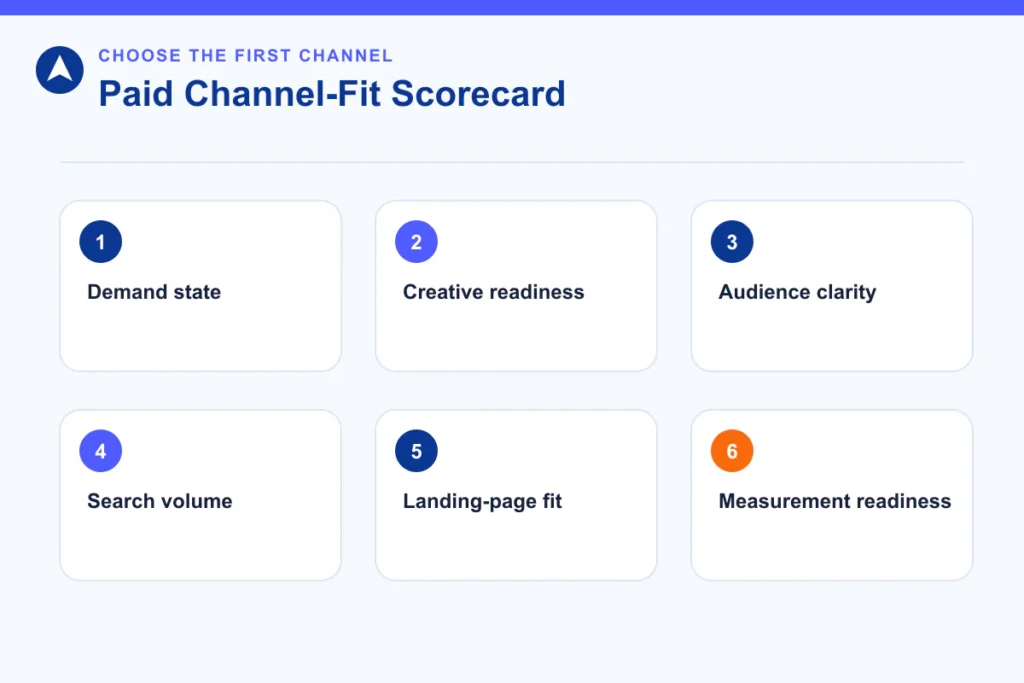
Give one point to the platform named by each true statement. A tie is a signal to run a deliberately separated test—not to blend budgets without a hypothesis.
Points toward Google Ads
- People already search for the exact service or problem.
- Speed and location or schedule control matter.
- The offer is easy to explain in text and a focused landing page.
- Keyword Planner shows relevant demand under the intended settings.
- The team can respond quickly to high-intent enquiries.
Points toward Meta Ads
- The product is visually compelling or benefits from demonstration.
- Customers may not know the category name yet.
- Audience and creative hypotheses are more important than search terms.
- The team can produce and refresh multiple compliant creatives.
- A multi-step discovery and remarketing journey is acceptable.
When a coordinated mix is justified
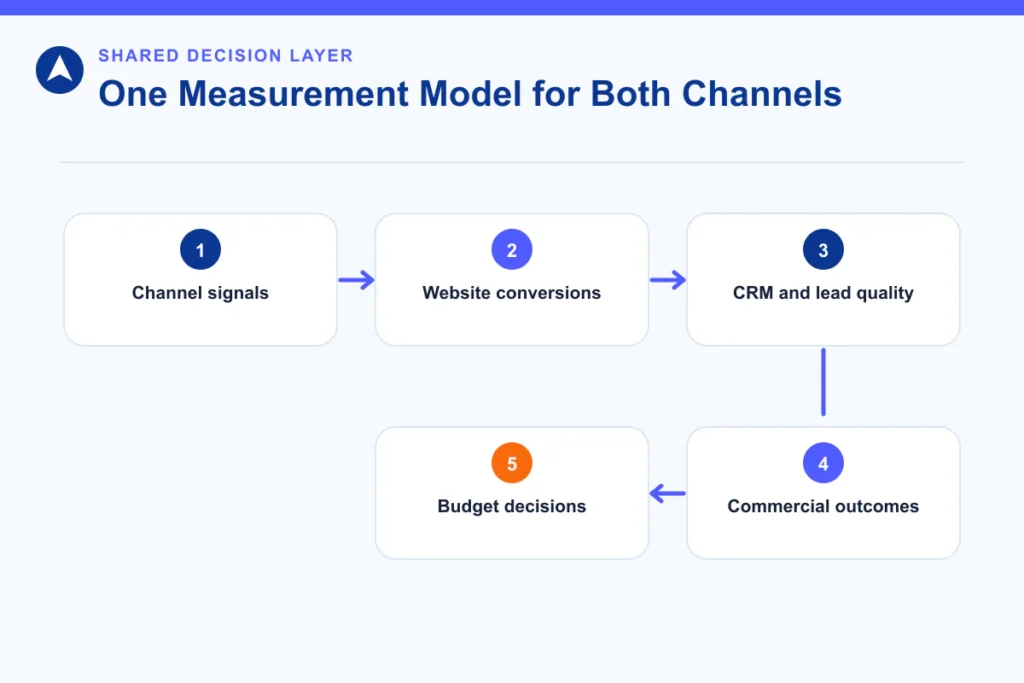
- Search captures existing demand while Meta introduces the offer to a defined audience.
- Meta creative reveals messages that can be tested in search copy and landing pages.
- Shared conversion definitions allow lead quality—not platform-reported volume alone—to be compared.
- Budgets and responsibilities remain separated enough to diagnose performance.
Avoid these comparison errors
- Using universal CPC, CPM or conversion benchmarks without a source, date and comparable market.
- Assuming the channel caused every reported conversion.
- Calling one platform cheaper without comparing lead quality and full costs.
- Launching both platforms when tracking or follow-up cannot support one.
- Treating platform forecasts as guarantees.
Digirank service context
Review PPC services and social media marketing services. Digirank has not created separate Google Ads or Meta Ads service pages in this phase because standalone proof and cannibalisation gates were not met.
Primary sources and review note
Reviewed 18 August 2026. Platform settings and policies can change; verify them in the relevant account before acting.
- Meta for Business: ad auction
- Meta for Business: budgets and schedules
- Meta Business Help: Conversions API
- Google Ads Help: bids and budgets