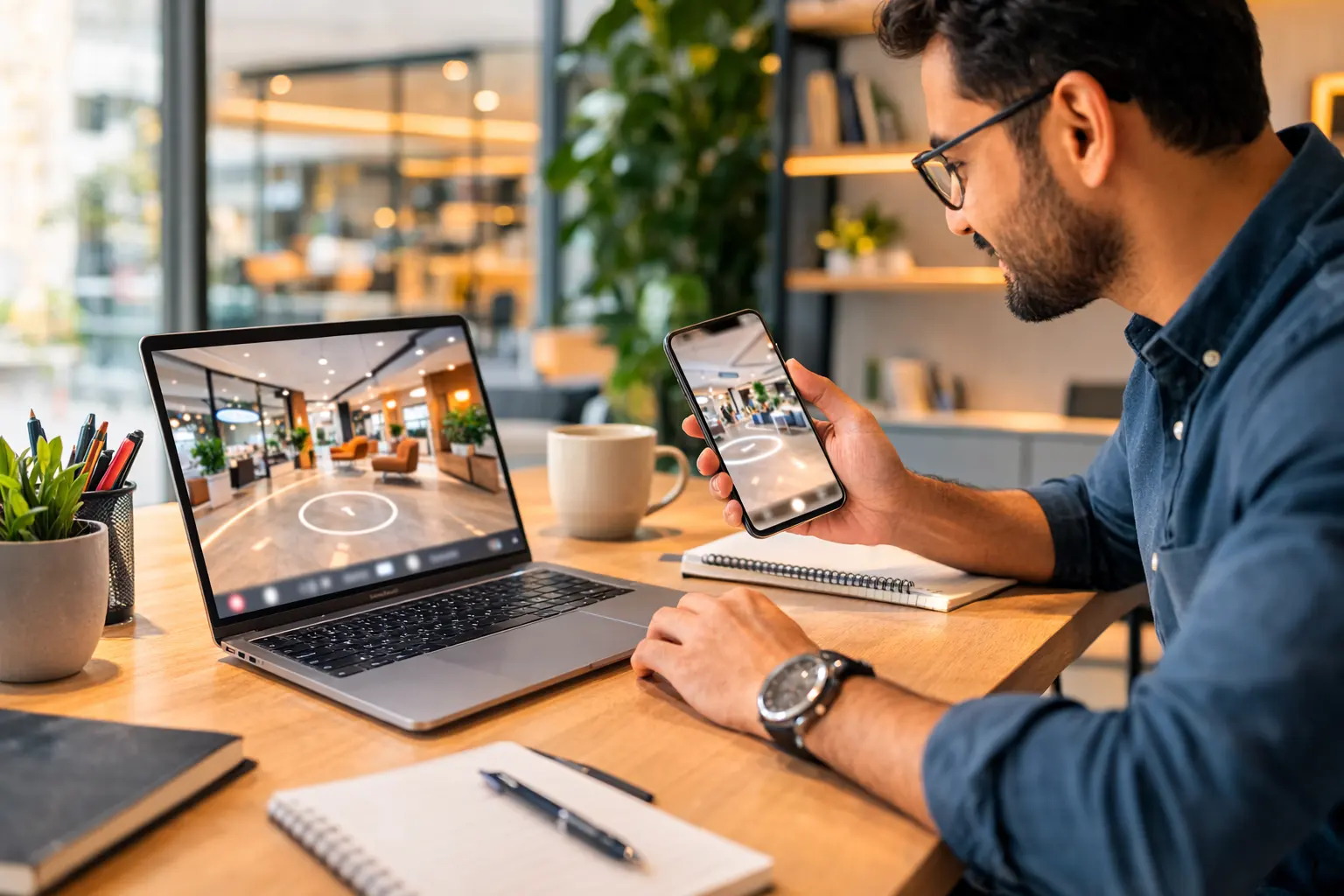
What Is a 360 Degree Virtual Tour and How Does It Help Your Business?
A 360 degree virtual tour is an interactive digital walkthrough that lets people explore your space before they visit, call, or enquire. For Indian businesses, it works best when it sits on your website and supports your Google presence. That includes Google Maps, Business Profile photos, and landing pages built for local SEO.
This matters because buyers now judge a business long before they speak to anyone. They compare spaces, look for proof, and try to reduce risk. A strong virtual view gives them that proof. It shows layout, ambience, accessibility, and professionalism in a way static photos often cannot. Done well, it can improve trust, qualify leads better, and shorten decision time.
Google’s own guidance on Business Profile photos and videos makes one thing clear: verified profiles, useful photos, and accurate information help customers find and understand a business. That is why a 360 degree virtual tour works even better when paired with local SEO and Google Business Profile optimization and a stronger understanding of the top ranking factors for Google Business Profiles. Google also shares official tips to improve your local ranking on Google, which align closely with complete profiles, accurate details, and stronger business presentation. That does not mean a tour alone guarantees rankings. It means the tour strengthens the experience and trust signals around your business.
Why a 360 Degree Virtual Tour Helps Businesses Win Faster
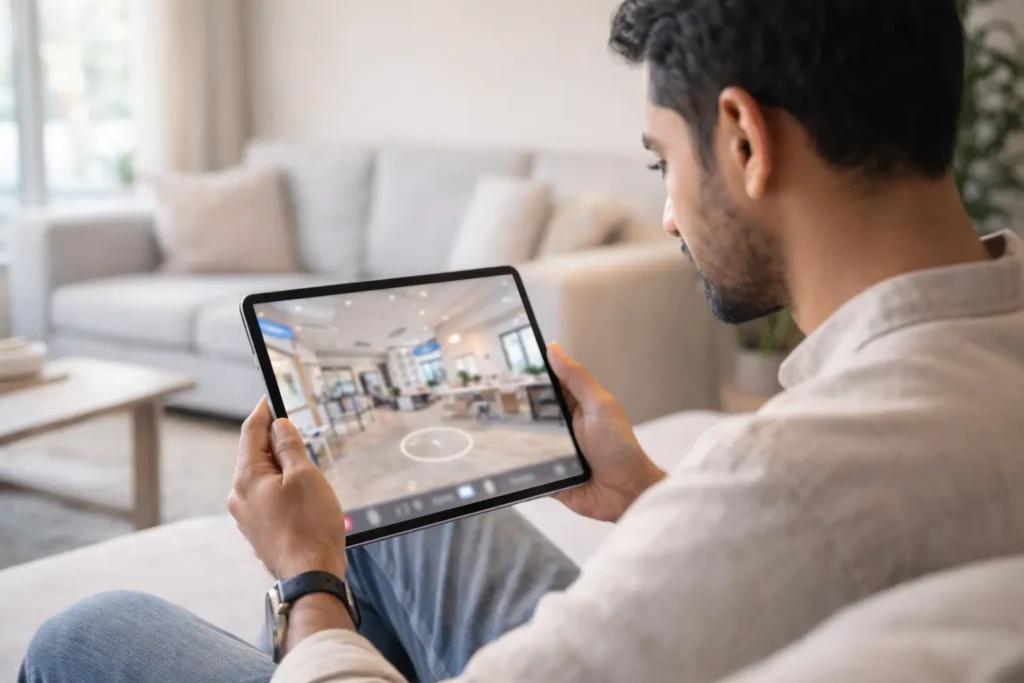
A 360 degree virtual tour reduces uncertainty and makes serious buyers act with more confidence because they can explore your space before they spend time, travel, or money.
That benefit shows up in practical ways. A parent can inspect a school campus. A customer can check a clinic entrance. A prospect can view a showroom layout. A founder can judge whether an office feels premium enough for meetings. This is why many virtual tour company websites focus on high-consideration industries such as hospitality, education, retail, and real estate.
The real gain is not just attention. It is pre-qualified intent. When visitors see your space clearly, weak leads drop and stronger leads rise. The business gets fewer basic questions and more decision-stage enquiries.
|
Format |
What the user gets |
Best use case |
|---|---|---|
|
Static photos |
Selected fixed angles |
Quick gallery updates |
|
360 degree virtual tour |
Panoramic images with click-based movement |
Stores, hotels, clinics, campuses, offices |
|
3d virtual tour |
Spatial model, deeper navigation, floor-plan style experience |
Premium real estate, large venues, complex layouts |
Why 360 Virtual Tour in Bangalore and India Makes Sense Now
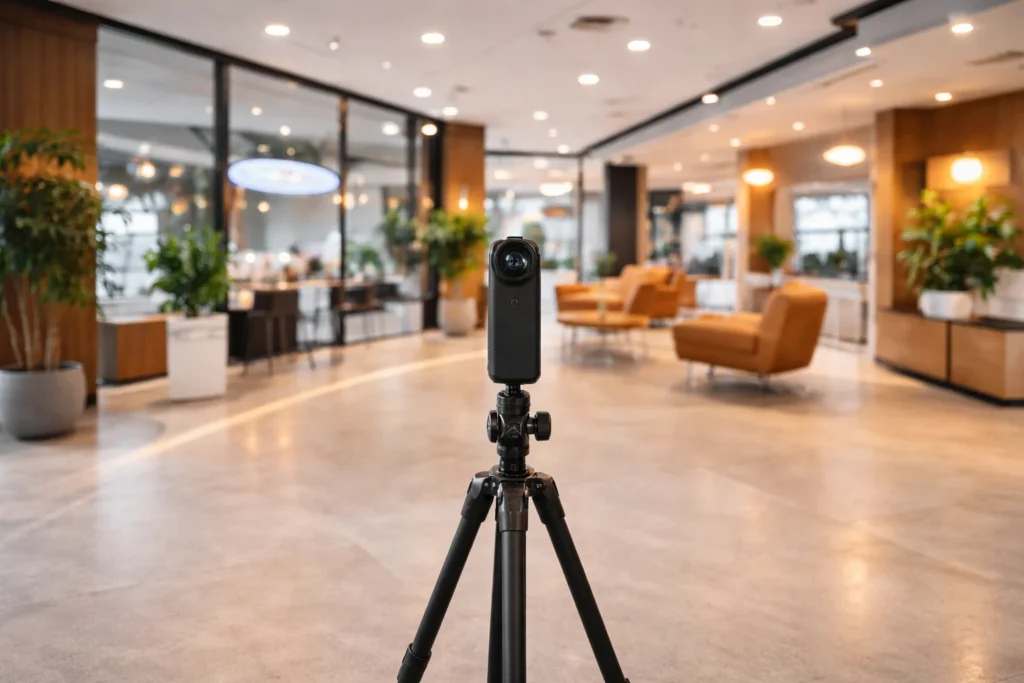
A 360 virtual tour in Bangalore works especially well because buyers in dense urban markets compare multiple options quickly and often make shortlists before the first visit.
Bangalore businesses operate in crowded categories. Coworking spaces, clinics, restaurants, salons, educational institutes, and premium offices all compete for local visibility and first impressions. A virtual experience can help a brand stand out when people search, browse maps, compare websites, and share options inside WhatsApp groups or buying teams.
Across India, this pattern is growing because mobile users want faster confidence. They do not want to guess what a place looks like. They want a clear virtual view before stepping out. For local brands, this becomes a trust layer. For regional brands, it becomes a scale layer.
360 Degree Virtual Tour vs 3d Virtual Tour: What Should You Buy?
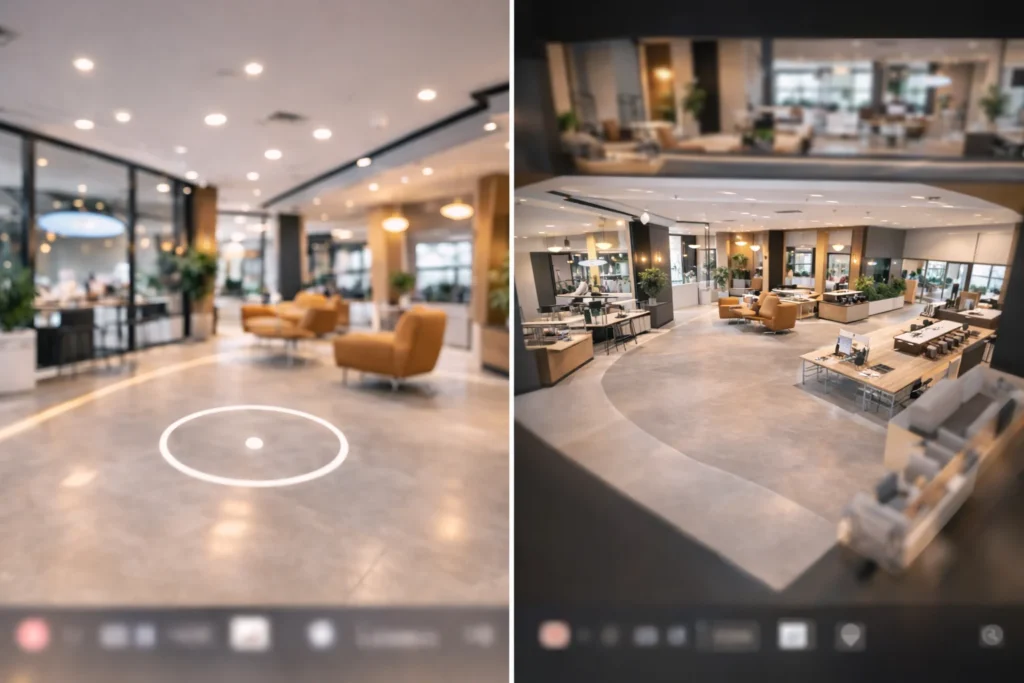
A 360 degree virtual tour is usually enough for most local businesses, while a 3d virtual tour makes more sense when layout accuracy, dollhouse views, or spatial detail truly matter.
This is where many business owners get confused. A 360 tour usually connects panoramic viewpoints using arrows or hotspots. A 3d virtual tour often adds a spatial model, floor plans, measurements, or a more fluid sense of moving through space. Matterport’s guide on how 3D tours differ from 360 tours explains this distinction well for businesses comparing formats.
Choose based on buying behaviour, not hype.
If you run a restaurant, clinic, salon, school, gym, or office, a polished 360 degree virtual tour may do the job well. If you sell large properties, event venues, hospitality inventory, or premium commercial spaces, a 3d virtual tour can justify the extra cost.
The wrong choice is buying advanced tech that your customers will not use, or buying a cheap tour that loads slowly and damages trust.
What the Best Virtual Tour Website Gets Right
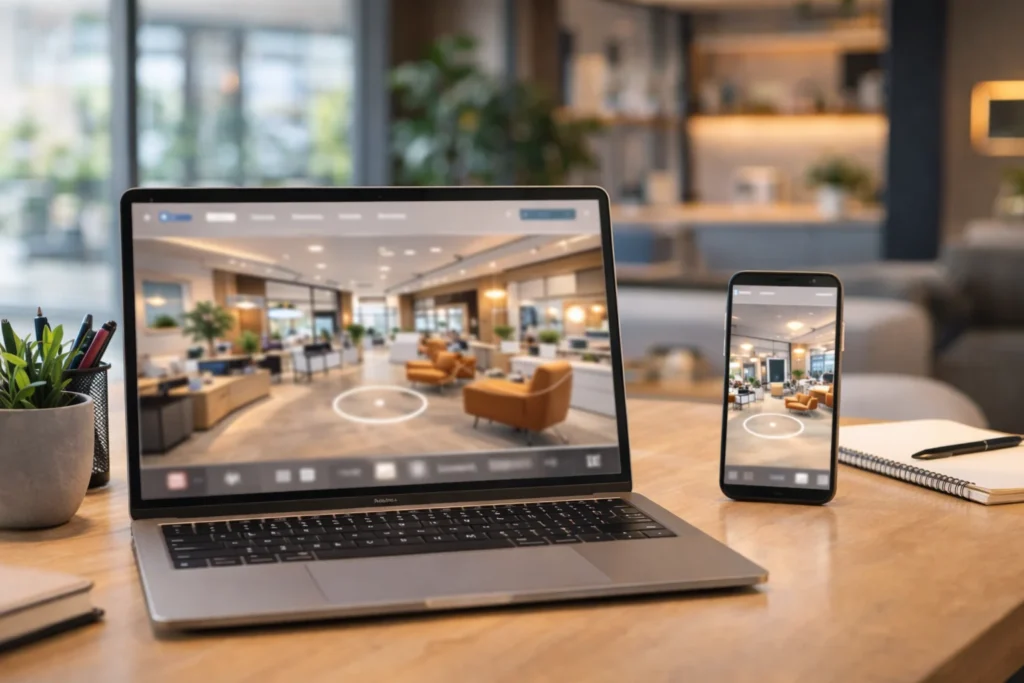
The best virtual tour website does not simply embed a tour. It explains the space, loads fast on mobile, and guides the visitor toward a clear next step.
This is where most websites fail. They add a tour in isolation and hope it does the selling. In reality, the best virtual tour website also needs strong layout, speed, and conversion thinking, which is why many brands combine this asset with support from a web design company in Bangalore. That rarely works. Your page needs context around the experience. It should explain what the user is seeing, who it is for, what makes the location special, and how to book, visit, or enquire.
A strong setup usually includes:
- a dedicated landing page, not just a hidden embed
- a fast-loading mobile experience
- short copy that answers real buying questions
- clear calls to action above and below the fold
- trust elements such as reviews, credentials, or case proof
- local relevance, including city or area intent where needed
- FAQs that answer voice-style questions naturally
Your virtual tour page should not be a thin media page. It should be a decision page. Google Search Central’s guidance on creating helpful, reliable, people-first content supports this approach, especially when your page is built to answer real user questions instead of just hosting media.
How to Choose a Virtual Tour Company Without Wasting Budget
The right virtual tour company should improve discovery and conversions, not just hand over a nice-looking file that nobody finds or uses.
Ask practical questions first. Will the tour work smoothly on mobile? Can it be embedded cleanly on your website? Can it support Google Maps visibility where relevant? Will you get hotspot support, branded navigation, analytics, compression, and ongoing edits?
Then ask business questions. What happens after launch? Can you track clicks, time on page, enquiries, and assisted conversions? Google also explains how to understand your Business Profile performance, which helps businesses measure discovery and engagement after publishing stronger visual content. Can the provider align the tour with your SEO, local landing pages, paid ads, and retargeting campaigns?
If the answer is no, you may be buying media, not marketing. Businesses that want execution support can also explore Digirank’s dedicated 360 degree virtual tours service to turn the experience into a lead-generation asset.
How Digirank Turns 360 Virtual Tours Into Real ROI
The best results come when a 360 degree virtual tour is treated as a growth asset, not a design extra.
Here is the real gap in the market. Many providers capture the space. Very few build the search journey around it. At Digirank, the smarter play is to connect the tour with local SEO pages, Google Business Profile strength, conversion copy, internal links, schema markup, and remarketing funnels.
That turns one asset into many outcomes. Your tour can support branded search, local discovery, sales conversations, ad landing pages, social proof, and even AI Overview citation opportunities when the surrounding content answers user questions clearly.
Turn Immersive Interest Into Measurable Business Growth
If your business wants better online visibility, more qualified leads, and stronger conversions, do not stop at publishing content that looks good. Build pages and digital assets that help people decide faster and trust you sooner. Digirank helps businesses turn search traffic into real enquiries with SEO, local search strategy, conversion-focused content, and measurable growth systems built for ROI.
Frequently Asked Questions about 360 Degree Virtual Tour
1. What is a 360 degree virtual tour?
A 360 degree virtual tour is an interactive walkthrough made from panoramic images. Users can look around in every direction and move from one scene to another online.
2. Does a 360 degree virtual tour help SEO?
Yes, but usually in an indirect way. It can improve user engagement, trust, and local relevance when placed on a useful page with strong supporting content. It does not guarantee rankings on its own.
3. Is a 360 degree virtual tour the same as a 3d virtual tour?
No. A 360 degree virtual tour usually uses linked panoramic points. A 3d virtual tour often adds spatial mapping, floor-plan style views, and deeper navigation.
4. Can I add a virtual tour to Google Maps or Google Business Profile?
In many cases, yes. The exact method depends on the capture format, platform, and publishing workflow. You should also keep your Business Profile verified and updated.
5. How much does a 360 degree virtual tour cost in India?
Costs vary by city, property size, number of capture points, editing, hosting, and whether you want a full 3d virtual tour. Small projects may start in the low thousands, while premium multi-floor work costs more.
6. Which businesses benefit most from a 360 degree virtual tour?
Hotels, restaurants, clinics, schools, retail stores, gyms, coworking spaces, showrooms, and real estate brands usually benefit the most because buyers want to inspect the space before visiting.
7. How long does it take to create a 360 virtual tour?
It depends on the size and complexity of the location. A small site may be captured quickly, while large spaces, edits, hotspot setup, and custom website integration can take longer.
8. What should the best virtual tour website include?
It should include a fast mobile experience, clear copy, strong calls to action, local relevance, trust proof, and a tour that supports decisions instead of distracting from them.